Thursday, February 13, 2014

Cinecittà


What is it about movie sets that make people giddy?  We took a trip to the infamous Cinecittà studio and the moment we walked onto the first set, recreating  your average 19th or early 20th century U.S. downtown street (adjusted for dozens of films, including Gangs of New York), the whole group of us just started laughing!  This continued on into ancient Rome and a set that has been used for everything from Ben Hur and Jerusalem to the Middle Ages and Renaissance Florence.


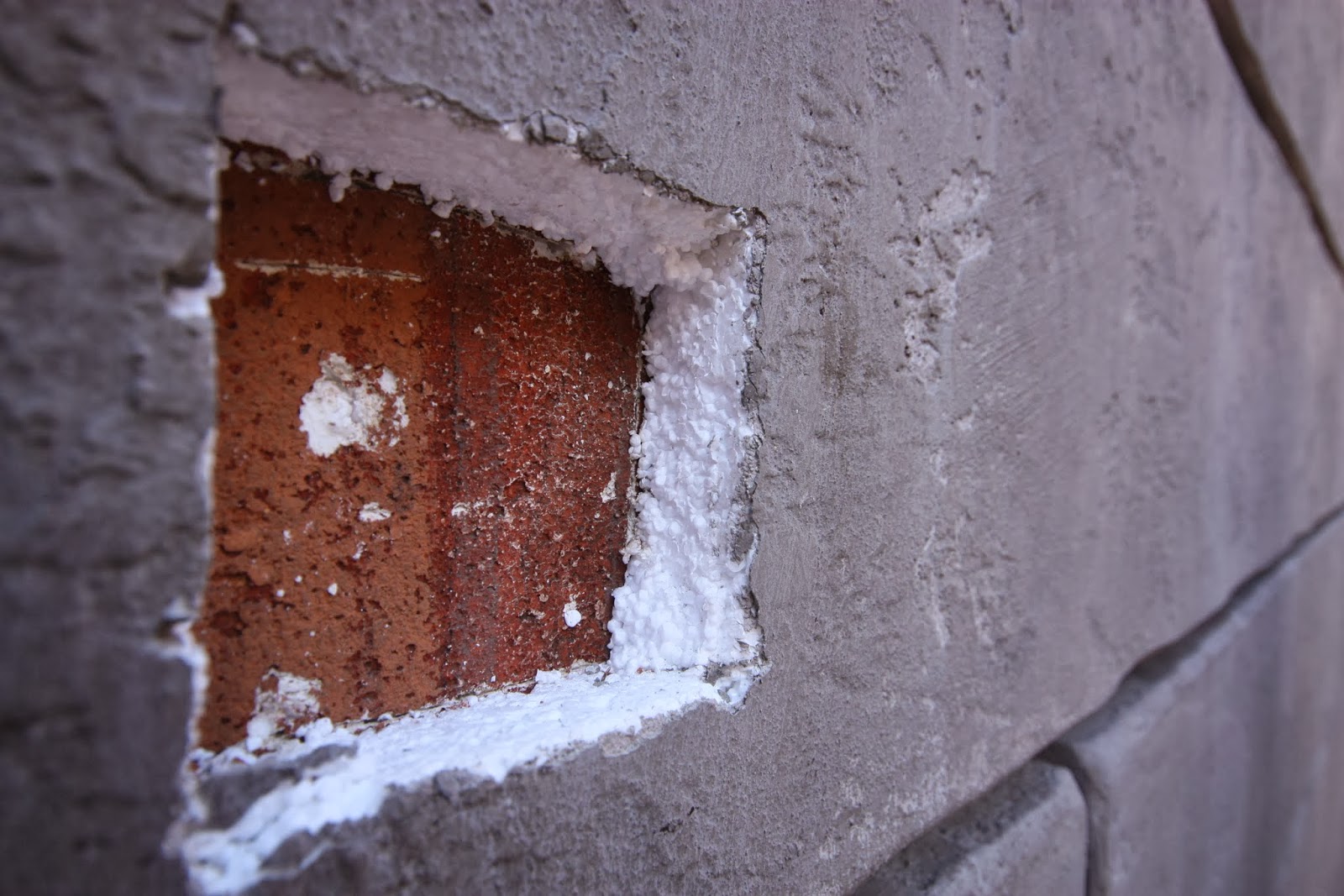
Just a reminder of what these set are really made of -- styrofoam.


Facadism

In the U.S. we would decry this as façadism.  But I am glad these remains of the 12th Century synagogue remain, incorporated into a restaurant.


Wednesday, February 12, 2014

Sant'Agnese fuori le Mura and Villa Torlonia

Beyond the walls, north and east of the centro storico, is Sant'Agenese fuori la Mura, the church built on the burial site of Saint Agnes.  The church is lovingly described in every detail by Margaret Visser in Geometry of Love, and I had long planned on going here when I arrived in Rome.

There has been some kind of church since she was martyred in the middle of the 3rd century CE, and the church today dates back to the 7th century.  But the remarkable thing is how the church is built below the road (or the road is built above the church).  From the road you see the top of the apse.  To get to the entrance you take a long staircase down into the earth, just above her grave and the a network of catacombs (which we also visited -- stone bunk beds for the dead, five high on either side of the tunnels).   


Nearby is the circular church of Santa Constanza, the daughter (or granddaughter -- some dispute) of Constantine who took on the protection of the tomb of Saint Agnes.  It is a remarkable structure from the 4th century, its dome undisturbed -- a Pantheon in miniature, but far less visited.  Perhaps the most stunning element, however, is not the dome but the complete sing of mosaics, which circle the inner sanctuary.  These mosaics have no overtly Christian content, as the church was built so early that pagan elements were the norm.   Winemaking seems to be the dominant theme.


To leave this moving early church and walk ten minutes to Mussolini's home during much of the 1920s and 1930s was quite a shock.  It was made both easier and more disturbing by the fact that the information panels of this 18th century mansion (now a public park and soon, I am told, a site for a Holocaust memorial) say virtually nothing about Mussolini. We get to his private rooms, and the sign says:  "This was Mussolini's bedroom."  They are much more interested in showing off the home as it was built by Prince Torlonia.

I later found out, at a party at Eric Salerno's house, that Mussolini's grandson (son of his daughter, a right-wing elected representative) goes to school at St. George's English school, which sits immediately next to the Villa Torlonia.  


Tuesday, February 11, 2014

Bureaucracy, Italian Style, Part 2

Going to the post office to submit an application for a long-term (i.e over 90 day) stay in Italy was only part one of a three-part bureaucratic drama. I have just returned from playing my meager part in Act 2.  In luxurious form -- Mercedes, driver, and chaperone (to ease the way with the bureaucrats) -- I went out to the kind of place every city has (some more, some less) -- the zone of ugly buildings, warehouses, government back offices, ringed with fences and dirt-lot parking.  It is where Breaking Bad takes place.  My job was to show up with the papers I was given at the post office and be fingerprinted for my permesso di soggiorno.  

Sorry to disappoint:  other than having to go out to this ugly place -- someone called it Guantanamo before I left on this excursion -- the experience was virtually painless.  I may have had the quickest trip there of anyone.  If I had been able to crack even one smile out of the ten government officials I encountered, it would have been a delightful afternoon.  Despite the illicit feel to the neighborhood, and the grungy office, and the waiting room that was no better than any other -- blue plastic chairs, a screen announcing whose ticket has come up, smell of hours wasting away -- all went easily and quickly.

Nevertheless, here are two small details of bureaucratic interest.  First, upon entering I put my backpack through the scanner. Three soldiers got all excited because it appeared I had metal in there.  I had left my pocket knife at home, but I certainly had some metal objects in there.  I was told to empty the bag.  Out comes the phone charger and tin can of mints.  No, that was not the problem.  Headphones.  Nope. Small metal spoon.  Yes!  Everyone relaxed.  I go to pick up the spoon.  Finger wag.  "You must leave it here.  Pick it up after your appointment."  So, I left my teaspoon and, yes, I retrieved it later, feeling all the safer knowing that the building had been clear of dangerous tableware.

And then there was the fact that I had to have all my fingers fingerprinted.  Fair enough.  All done, I went back to a different office....only to have the fingers fingerprinted again.  The funny thing is that both times I was fingerprinted on a digital scanner, which might suggest that the finger prints would be accessible on the office's server.  Alas, no.

Part 3 comes in a few weeks, when I go to retrieve my actual permesso from the Trastevere police station.   Stay tuned....

Monday, February 10, 2014

What you see is not what you think you see


The untouched remains of the Roman empire, at its civic and commercial core, the Forum Romanum?

Or an urban renewal zone, which removed 1500 years of human settlement in order to feed a longing for a mythical Roman past?

Sacred ground for classicists?  Or crime scene for medievalists?

An archaeological site preserved without political overtones, or a fascist era site remade (including the wide avenue cut right through the site in the 1930s, to link Piazza Venezia and the Colosseum)?

The place I remember so vividly walking into on a misty morning in 1984 (who knows if it was misty -- it is in my memory!), and imagining I was walking back in time and could recreate, with my trusty Blue Guide, ancient Rome, is far more complicated than that.  Thank goodness. Or, alas.


Sunday, February 9, 2014

Basilica of Saint Sabina

I suspect Garry Wills, U.S. historian, practicing Catholic, and relentless and eloquent critic of the Catholic Church as it functions now, would probably love Saint Sabina, one of the most beautiful early churches I have seen.  I think Wills would love it because it beckons back to the early church, before much of the overlay of hierarchy and judgment that he has criticized.  Spare, humble, dark -- it is such a contrast to some of the excessiveness one sometimes feels in much later churches.  As a preservation issue, it is complicated.  The Church was largely brought back to its 9th century feeling (which already represents a big enlargement on the first, 5th century church) in the 1930s.  Much of that work was about revealing what was beneath later additions.  But certainly, it was also much changed.  And the Renaissance chapel and apse, with elaborate frescoes remained in the renovations. Figuring out what is "original" (like the doors, which are some of the very oldest carved wooden doors anywhere) and what has been changed by previous generations, or by the restorers in the 20th century, can be maddening.  I will note that the columns are original and were not pillaged from other buildings, as was so common for major buildings after the fall of the empire.

But after all is sad and done, it is a beautiful place.  In addition, this dark, quiet interior, is balanced by a neighboring terrace, lined with orange trees, and culmination in a panoramic view of the city.


Even more textures