Monday, April 7, 2014

Siracusa

I am just back from the Academy's trip to Sicily.  I have my "shoptalk" on Tuesday, April 8, so for now I'll just post some photographs of the cities and sites we saw, starting with my favorite -- Siracusa.


Saturday, April 5, 2014

Florence, early morning

No matter how many tourists are in a city -- and Florence, even in March, can match almost any place -- the city can be found quiet and empty at seven in the morning.


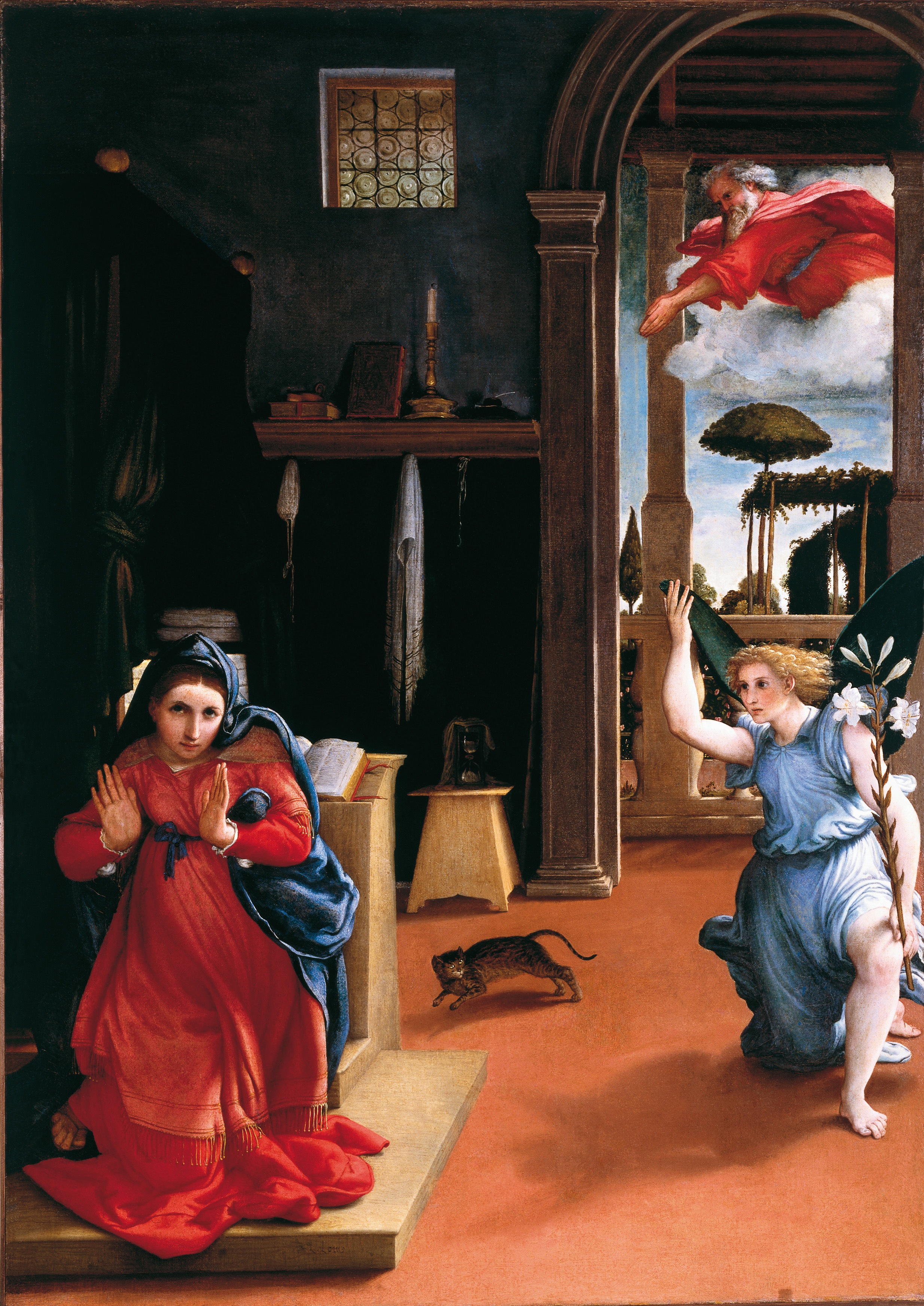
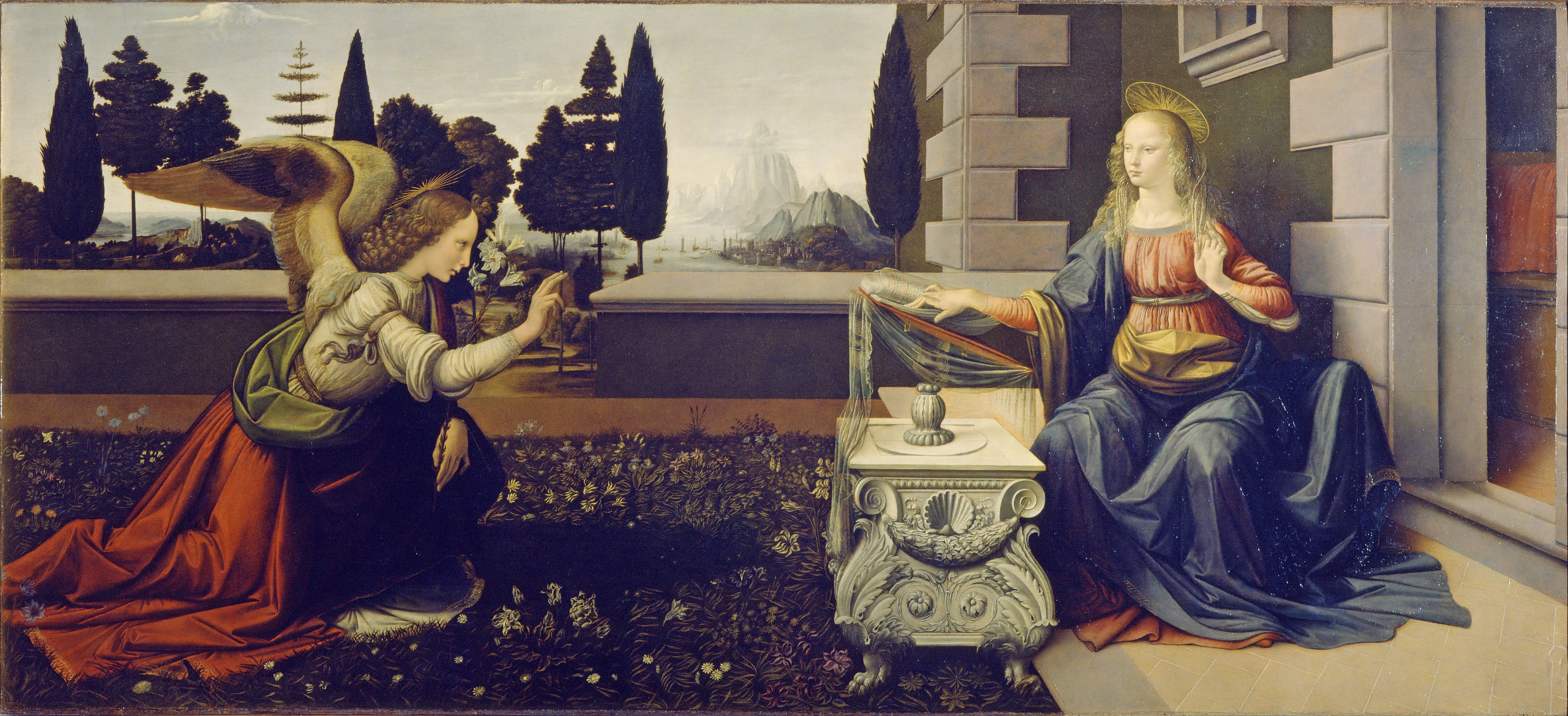
Annunciation

A line from George Steiner's Real Presences struck me, after a week of seeing great works of art in Venice and Florence -- more than a few portraying the subject of the Annunciation.

Here is Steiner:

"In Lorenzo Lotto's Annunciation, one of the most unsettling, haunting versions we have of this inexhaustible theme, the Lady turns her back on the rushing radiance of the Messenger.  That, too, is possible."


In the Uffizi Gallery in Florence, early in the endless rooms filled with one spectacular Italian painting after the next, is an Annunciation that is even more shocking than that of Lotto.  From two hundred years earlier, in 1333, is a painting of a scowling Mary, giving the angel Gabriel a look that could kill.  His scowl suggests that the painting describes a "conversation" in process, with his anger following her resistance to the call.


More placid on the surface, but more mysterious the longer you look at it is Leonardo's Annunciation, further on in the Uffizi galleries.  Painted in 1472, it seems to capture a more placid Mary, accepting her call.  But is it so?  She has her fingers pushed firmly into a page from the book she is reading.  It is the gesture of someone who has found something of importance there.  Or someone who does not want to lose her place, and is perhaps not pleased by the interruption. The wall of the garden she sits is said to be a symbol of her virginity.  But there is an opening in the wall, and access to the glorious landscape beyond, green and tame in the foreground, and more dramatic and sublime in the distance. Is this the world she is dreaming of, or reading of, or fantasizing about when interrupted with the call of Gabriel?  Is her distraction the cause of his intense stare and fingers held high, as if to grab her attention.  Is she not looking beyond him?


That Christian divine call can be transposed into a secular or non-denominational divine call.  I am taken with Steiner's use of this to describe our reaction to art, writing, music -- and what he would call the divine that has to lie behind the response.  But we also have the freedom to reject the gesture of the artist, the writer, and the musician, to turn away from the power of those creations.

Friday, April 4, 2014

Venice in the morning

Before the crowds (of which I was a part!) filled the streets....


Thursday, April 3, 2014

Cinque Terre, Hong Kong in Liguria

This is, of course, ridiculous -- Hong Kong in Liguria!  My brother-in-law Elliot Weinbaum, who had his sights (thank goodness) set on going to Cinque Terre laughed out loud when I said that the Cinque Terre reminded me of Hong Kong.  But it is true, in a very, very limited way:  every single piece of land on these steep, steep, rocky cliffs is used, and houses are built one atop another, clustered on the tiny peninsula's that jut out into the sea in a way that reminded me of Hong Kong island, where the full width of developable land on which those hundreds of skyscrapers have been built is no more than a few hundred yards.  

The inhabitants of Cinque Terre, who had difficult access even to the water which they looked over, seem perched on the edge of the country, having fled (back in the 13th century) from other more dangerous places.  Like Hong Kong, it seems to make no sense to build here.  And yet the end result are towns of ridiculous quaintness, and wines of great quality coming from grapes grown at 45 degree slopes (with a contraption which snakes its way up the hillside to transport the ripe grapes), and an eight-hundred-year-old walking path that takes your breath away -- because of the beauty of the scenery -- while taking your breath away -- because of the steepness of the path.  I am convinced there were more uphills than down hills.


A bride-to-be, checks her cell phone before preparing for her pre-wedding photo shoot overlooking Manarola.


Wednesday, April 2, 2014

To Restore or Not to Restore

I recently railed against the trend toward recreating historic buildings -- Berlin's Schloss and Joseph Paxton's Crystal Palace in London.

And then I want to Venice and on the first day, rode to the top of the Campanile di San Marco.  (Note, "rode" -- the Campanile has an elevator, unlike Giotto's Bell Tower and Duomo in Florence.  We climbed both and are better for it!).

The combination of the austere Palazzo Ducale, the ballooning domes of the Basilica di San Marco, the massive, L-shaped Piazza San Marco, ending with two columns above steps into the lagoon, all held together at the intersection of palace, basilica, and square, by the Campanile di San Marco, constitutes one of the most recognizable and uplifting public spaces in the world.  There is much to say about how this almost perfect public space was created over a millennium, with the help of visionary leaders and despicable autocrats, the service of the public good and private gain.  But I wanted just now to highlight the Campanile and its history.  Built on Roman foundations in the 9th century, it has been destroyed by fire, been damaged or fallen due to earthquakes, and been dramatically remade on numerous occasions over the past millennium.  The form as we know it today comes from designs completed after the earthquake of 1511.  More recently, the tower fell down  -- remarkably killing no one -- early on July 14, 1902.  That evening, it was voted to rebuild the Campanile exactly as it was.  On April 25, 1912, the new/old building was inaugurated.

My convictions were tested as I nodded in approval about the decision to recreate what was a key feature of one of the best known cities in the world.   Could it be any different? Did they not have to rebuild the Campanile?

No.  Due to the design (of many city builders over centuries), and due to the image of the city, that spot demanded and demands a tower, to anchor the whole.  But that same spot was anchored by other towers of different designs over the centuries of Venice's empire.  A new, modern tower -- in 1912, or if and when a new one is needed in the future --  could have built, and could build, on the tradition of this one-time city of the future.

Tuesday, April 1, 2014

Views from Above

I have just returned from a trip to Venice, Verona and Florence, in part to pursue the works of Carlo Scarpa, a significant figure in both modern architecture, historic preservation and museum design.  He worked largely in Venice and the Veneto region, but he also played a key role in the redesign of the Uffizi galleries in the 1960s.

But more on him later.  Here are some panoramic views from high places in Venice and Florence.  When I look at them now, a few days later, I think not of the glorious skyline, but of the fabric of the city below.  Change the facades, the rooftops, the materials of the buildings, but retain the density, the orientation around the streets, the piazzas and their internal courtyards, and the essence of the experience of these city will remain the same.  Maintain each individual structure in a perfect "authentic" stye of preservation but remove the canals and the maze of pedestrians streets in Venice, the piazzas large and small across these cities, and you have lost Venice and Florence completely.

Venice from the Campanile di San Marco, with the basilica and Doge Palace in the foreground:


Venice, from the Campanile, looking northward from Piazza San Marco:


Florence from the top of the Duomo, with Giotto's Bell Tower in the foreground:


 Florence from the top of Torre Guelpha, with Palazzo Vecchio and the Duomo in the distance:


And a gratuitous final image, because the sunrise from Torre Guelph was so beautiful!