What I was especially struck by is how these "new" buildings and gardens of the 16th century were, in an interesting way, a form of preservation of the Roman past. The gardens were built atop Roman gardens, and an ancient Roman "hill of Parnassus," the mythological home of the Muses, was kept in one portion of the Villa's gardens. The facade of the garden-facing side of the building is a composite of fragments of Roman buildings, including pieces from the Ara Pacis. The enclosing wall of the gardens is built on top of the Aurelian Wall. There is a deep respect -- even reverence -- for the ancient past that is evident throughout the Village Medici, even as they were creating something wholly new and, of course, covered over the ancient ruins that were there.
Thoughts, observations, and maybe some insights on Rome during my spring as a Rome Prize fellow at the American Academy in Rome -- Max Page
Friday, March 14, 2014
Villa Medici
We spent the morning at the Villa Medici -- since 1803 the home of the French Academy -- under the intellectual guidance of Alden Gordon and John Pinto, two experts on the art and architecture of Rome and France. It was a spectacular morning so everything looked good. It is a grandiose building and glorious set of gardens that even the American Academy cannot match. But that's like debating in heaven whose cloud is softer.
What I was especially struck by is how these "new" buildings and gardens of the 16th century were, in an interesting way, a form of preservation of the Roman past. The gardens were built atop Roman gardens, and an ancient Roman "hill of Parnassus," the mythological home of the Muses, was kept in one portion of the Villa's gardens. The facade of the garden-facing side of the building is a composite of fragments of Roman buildings, including pieces from the Ara Pacis. The enclosing wall of the gardens is built on top of the Aurelian Wall. There is a deep respect -- even reverence -- for the ancient past that is evident throughout the Village Medici, even as they were creating something wholly new and, of course, covered over the ancient ruins that were there.
Wednesday, March 12, 2014
Memorials in Berlin
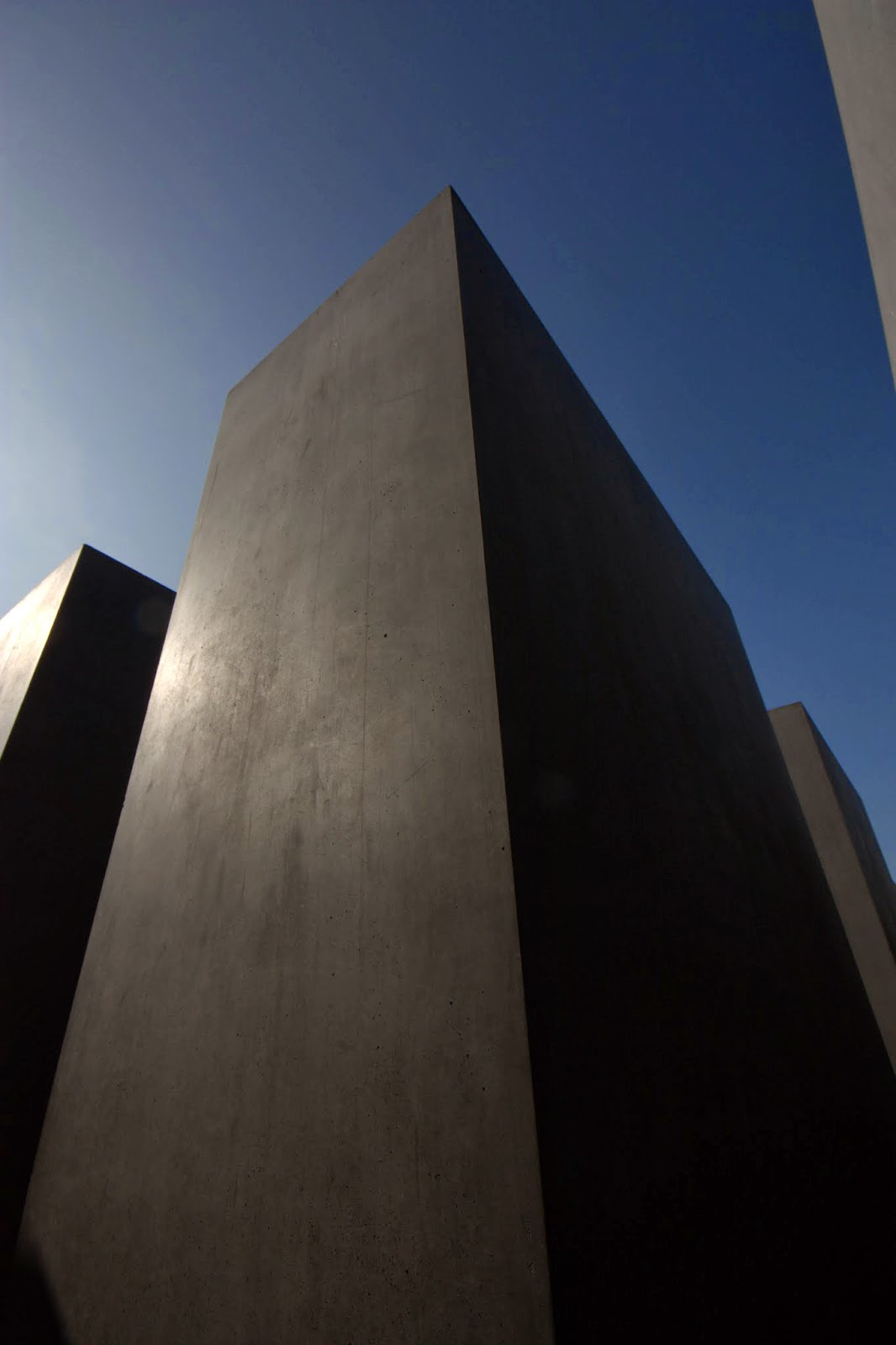
I was in Berlin this past weekend (to meet with our partners at the Technical University of Berlin and one of my graduate students) and managed to revisit memorial I know well, and see some new ones. The density of the effort to remember and warn (Vergiss es nie -- never forget) is stunning, especially in comparison to what I have found in Rome thus far.
More reflections to follow the photos.
Peter Eisenman's Holocaust Memorial. My take, from 2005.
The ludicrous project to rebuild the Berliner Schloss on Unter den Linden.
Stolpersteine on Gross Hamburgerstrasse, in Prenzlauer Berg
More reflections to follow the photos.
Peter Eisenman's Holocaust Memorial. My take, from 2005.
The ludicrous project to rebuild the Berliner Schloss on Unter den Linden.
The Nueue Wache, once a guard house and then a shifting series of memorial purposes. Now it is a general memorial to those who died in war.
Stolpersteine on Gross Hamburgerstrasse, in Prenzlauer Berg
A new memorial outside the Reichstag, remembering the 96 legislators killed by the Nazis.
A new memorial to the 500,000 Roma and Sinti who were killed in the Holocaust.
Friday, March 7, 2014
I complaineth not
In order to clear my mind of emails and flight planning and calendar arrangements, I left the library and am now working in the Academy's garden. This is not mean to induce jealousy but rather to express profound gratitude for the privilege of being able to write and think here!
Words to Live By
"Sigmund Freud said that in every idealization there is an aggression....To depict the Pope as a kind of superman or a star seems to me offensive.”
--Pope Francis, March 5, 2014
Thursday, March 6, 2014
Views from the Kitchen
I've obsessively taken photos out the window of the second floor kitchen at the Academy, while I wait for the coffee to percolate. Each day the view is slightly different, if always beautiful.
Basilica San Clemente
With Carol and George Weinbaum leading the way (okay, I forced them to go) I finally made it to the Basilica San Clemente, a beautiful church of around 1100, with some of the finest Byzantine mosaics in Rome. More than enough to justify a visit. But the church, like so many in Rome, was built upon earlier churches, and earlier Roman sites. offering a 2000 - year layer cake of archaeology.
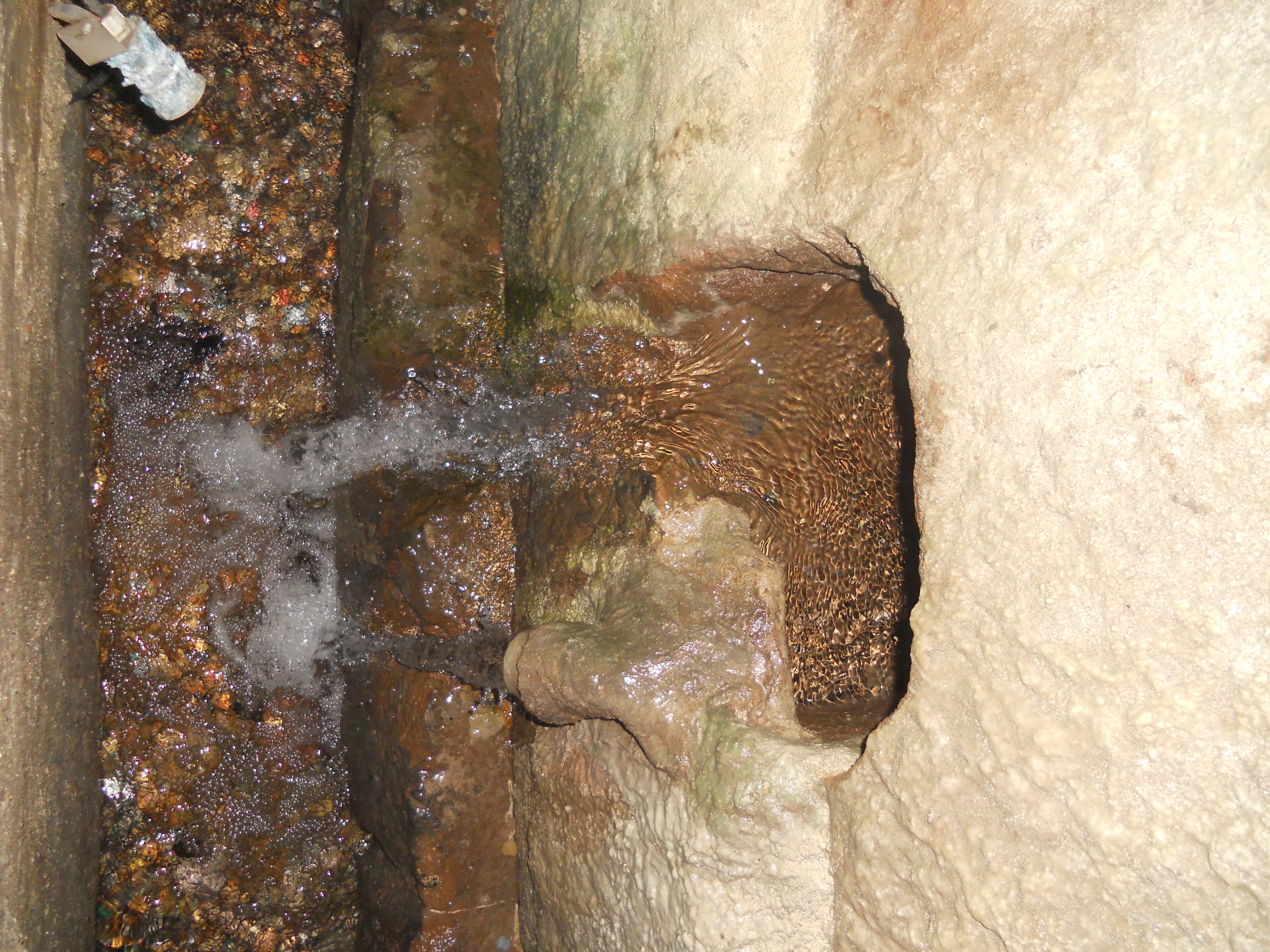
But like so few, this one has well-preserved layers beneath it, uncured and steadily excavated starting in the mid-19th century. So passing through the gorgeous "new" basilica of the 1100s, we descend down through the layers -- to the 4th century basilica, and then two 1st century roman buildings (which include a mithraeum, a sacred space below ground for the practitioners of the religion of Mithraism), and, below that, the remains of a building destroyed by the great fire of 64 AD. When you reach this level, in the winding passageways of the excavations, you start to the heart the sound of rushing water. And there you come across a madly rushing channel of water, the rushing spring which has been hear long before any of the layers above, and justified building on the site. Like other places in Rome, which I have approached with lots of expectation and a worry that I will be disappointed, I found my experience exceeded my hopes. The surprise of discovering this ancient and persistent stream, 60 feet below the current street level, was stunning.
This time I honored the request to take photographs of the church, so these are other people's photographs.
Three of the layers
The present basilica
The mithraeum
The spring
But like so few, this one has well-preserved layers beneath it, uncured and steadily excavated starting in the mid-19th century. So passing through the gorgeous "new" basilica of the 1100s, we descend down through the layers -- to the 4th century basilica, and then two 1st century roman buildings (which include a mithraeum, a sacred space below ground for the practitioners of the religion of Mithraism), and, below that, the remains of a building destroyed by the great fire of 64 AD. When you reach this level, in the winding passageways of the excavations, you start to the heart the sound of rushing water. And there you come across a madly rushing channel of water, the rushing spring which has been hear long before any of the layers above, and justified building on the site. Like other places in Rome, which I have approached with lots of expectation and a worry that I will be disappointed, I found my experience exceeded my hopes. The surprise of discovering this ancient and persistent stream, 60 feet below the current street level, was stunning.
This time I honored the request to take photographs of the church, so these are other people's photographs.
Three of the layers
The present basilica
The mithraeum
The spring
Wednesday, March 5, 2014
from Alice Walker's The Color Purple
From The Color Purple, by Alice Walker
Shug: I think it pisses God off when
you walk by the color purple in a field and don't notice it.
Shug: More than anything God love
admiration.
Celie: You saying God is vain?
Shug: No, not vain, just wanting to share a good thing. I think it pisses God off when you walk by the colour purple in a field and don't notice it.
Celie: You saying it just wanna be loved like it say in the bible?
Shug: Yeah, Celie. Everything wanna be loved. Us sing and dance, and holla just wanting to be loved. Look at them trees. Notice how the trees do everything people do to get attention... except walk?
[they laugh]
Shug: Oh, yeah, this field feels like singing!
Celie: You saying God is vain?
Shug: No, not vain, just wanting to share a good thing. I think it pisses God off when you walk by the colour purple in a field and don't notice it.
Celie: You saying it just wanna be loved like it say in the bible?
Shug: Yeah, Celie. Everything wanna be loved. Us sing and dance, and holla just wanting to be loved. Look at them trees. Notice how the trees do everything people do to get attention... except walk?
[they laugh]
Shug: Oh, yeah, this field feels like singing!
Rome begs to be appreciated, too.
Subscribe to:
Posts (Atom)